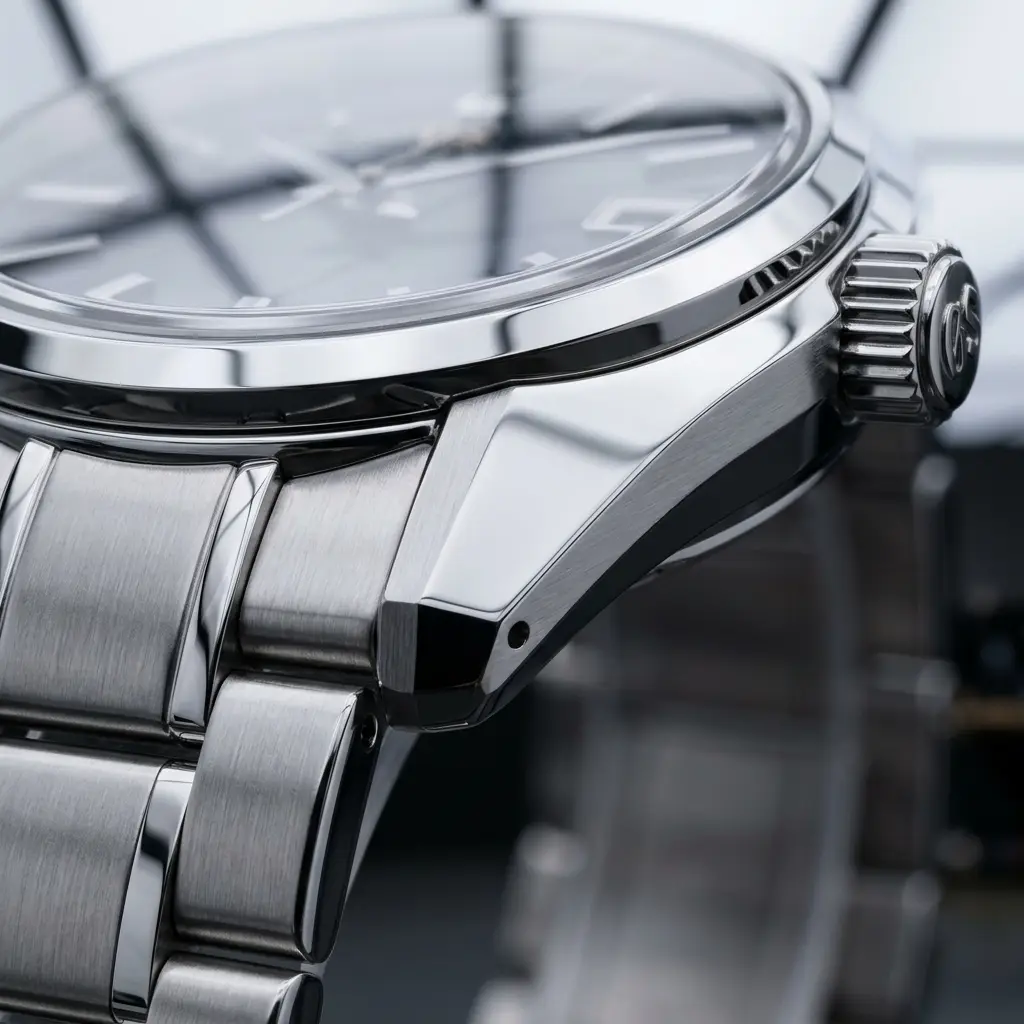
Beneath the dial: anatomy of an automatic movement
Two hundred parts, four hertz, and the silence of honest mechanics. From mainspring to escapement, a tour of the machine you carry without seeing.
By Hélène Cardon · · 7 min read
© Antigravity AI
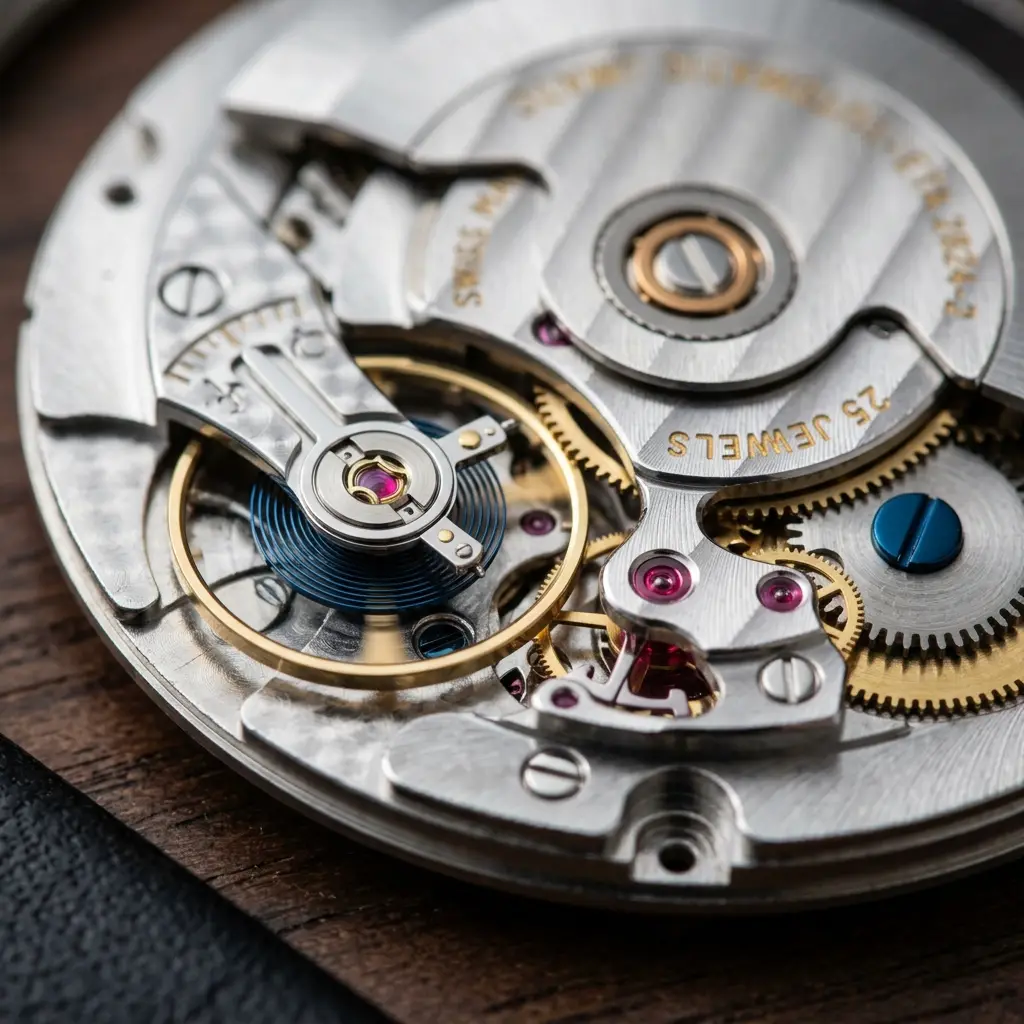
Lifting the caseback of a mechanical watch is like opening a cathedral. Everything is miniaturised to the point of absurdity, yet nothing is gratuitous: every part has a function, every screw a reason. Even the most virtuoso finishing, such as zaratsu polishing, answers first to a demand for mechanical honesty.
Energy: the mainspring and the rotor
It all begins with the mainspring, coiled in a barrel a few millimetres across. This is the watch’s battery. It stores the energy received during winding and releases it through decreasing tension to the rest of the movement. In an automatic watch, the rotor (a half-disc of metal pivoting freely at the back of the calibre) takes care of this winding. It turns with the slightest motion of the wrist and, through a system of reduction gears, silently retensions the mainspring.
A modern automatic typically offers between thirty-eight and eighty hours of autonomy without winding. The Hamilton H-10 and the Tissot Powermatic 80 have become benchmarks at their price point, the kind of calibres you meet when choosing your first mechanical watch.
Gear train and escapement
From the barrel, energy travels through a cascade of gears: the gear train, which steps down the rotation and ultimately drives the hands. But without a brake, the mainspring would unwind all at once. That is the role of the Swiss lever escapement, invented in the eighteenth century and refined ever since: it releases energy in calibrated impulses at the frequency set by the balance wheel. It is around this regulating organ that the most spectacular complications gather, starting with the tourbillon.
This balance wheel, a small flywheel kept oscillating by the hairspring, typically beats at 28,800 vibrations per hour, or four hertz. It alone determines final accuracy.
Give me a perfect escapement, and I will give you a perfect watch. Abraham-Louis Breguet
The hairspring, the detail that changes everything
A few centimetres long, finer than a human hair, the hairspring is the most underestimated organ in horological mechanics. Its geometry conditions isochronism, the regularity of oscillation, regardless of position, temperature, or mainspring state. Modern alloys, from Nivarox to silicon, have stabilised this behaviour to levels that COSC certification (-4/+6 seconds per day) now treats as a floor.
All of this, beneath your dial, in absolute silence, to transform a flick of the wrist into the heartbeat of time.
Also worth reading